Future-Proof Your Marketing Strategy with AI
Rysa AI Team
AI isn’t a distant promise—it’s the backbone of modern, high-performing marketing organizations. Teams that implement AI marketing strategies today are winning on speed, personalization, and measurable outcomes while reducing manual work and operational friction. This guide shows you how to integrate AI across your stack, personalize at scale, deepen customer engagement, and prepare for what’s next in AI-driven marketing.

Understanding AI's Role in Modern Marketing
Defining AI in marketing
Artificial intelligence in marketing refers to machine-driven systems that analyze data, predict outcomes, and automate or augment tasks across the content, acquisition, conversion, and retention lifecycle. It encompasses several capabilities:
To make this real for your team, it helps to picture how marketers collaborate to plan and operationalize these capabilities across channels and journeys. The image below shows a typical working session where teams align on goals, inputs, and workflows for AI-powered content and campaigns.

This kind of cross-functional planning ensures AI supports clear objectives—like SEO growth, lifecycle activation, or pipeline impact—while preserving brand and compliance guardrails.
- Machine learning: Identifies patterns in historical data to predict outcomes like churn, conversion likelihood, or the best time to send emails.
- Natural language processing (NLP): Understands, generates, and optimizes text for search intent, tone, and brand style.
- Generative AI: Creates content—blogs, metadata, ad copy, product descriptions, and images—guided by briefs, SEO strategies, and brand guidelines.
- Predictive analytics: Forecasts traffic, demand, LTV, and campaign performance; supports budget allocation and marketing mix decisions.
- Decisioning and automation: Selects next-best-actions (NBA) in real time across channels—e.g., personalize homepage modules or trigger outreach based on behavior.
Where AI delivers the most value today
- Research and planning: Topic discovery, search intent analysis, clustering keywords, and competitive gap analysis.
- Content operations: Drafting outlines, briefs, variations, metadata, and updating aging content at scale.
- Performance marketing: Creative testing (copy and assets), budget optimization, and automated bid strategies.
- Lifecycle marketing: Predictive segmentation, dynamic journeys, and behavior-triggered messages.
- Sales enablement: Intent detection, lead scoring, and personalized collateral for specific accounts or industries.
If content is your growth lever, consider a focused content ops pilot: accelerate briefs, drafts, and refreshes with Rysa AI to slash cycle times while improving SEO performance—start a free trial or book a quick demo to see it in action.
AI's impact on marketing trends
AI marketing strategies have reshaped what “good” looks like:
- From campaigns to continuous optimization: Models learn from performance data in near real time—automating experimentation and iteration.
- From gut feel to evidence-led decisions: Data-driven prioritization reduces guesswork in channel mix, content topics, and audience targeting.
- From one-size-fits-all to true 1:1 personalization: Dynamic content and offers adjust to user intent, lifecycle stage, and propensity.
- From siloed tools to intelligent ecosystems: APIs, CDPs, and iPaaS enable data exchange and unified activation across channels.
- From vanity metrics to revenue accountability: Predictive models tie content and campaigns to pipeline and LTV, not just clicks and impressions.
- From manual content production to scalable content ops: AI accelerates output while maintaining brand voice and SEO standards.
The privacy-first shift
As third-party cookies fade, AI helps teams pivot to first-party data strategies:
- Enrich zero- and first-party data from interactions, quizzes, and gated content.
- Infer preferences via behavior (pages visited, dwell time, scroll depth).
- Unify profiles into a CDP and activate across channels with consent-aware logic.
Case studies of AI in action
- E-commerce SMB increases AOV: By deploying AI-driven product recommendations and send-time optimization in email, a retailer lifted average order value and boosted repeat purchases with dynamic bundles and personalized promotions.
- B2B SaaS accelerates SEO growth: A content team used AI to cluster keywords, generate briefs, and refresh legacy articles. Pairing human subject-matter expertise with AI drafts reduced time-to-publish while improving rankings for product-led topics.
- Lead scoring improves pipeline efficiency: A marketing ops team trained a conversion propensity model on CRM data (firmographics, web behavior, email engagement). Sales focused on high-fit, high-intent accounts, reducing time-to-first-meeting and increasing close rates.
Integrating AI with Existing Marketing Tools
Evaluating current tools
Before you add AI, audit your stack. Identify what to keep, where to add AI, and where to consolidate.
Audit framework
- Data inventory
- Sources: analytics, CRM, MAP, CDP, web events, product usage, ad platforms, support tickets.
- Quality: Completeness, accuracy, timeliness, and unique identifiers (emails, account IDs).
- Compliance: Consent tracking, data retention, regional regulations (GDPR, CCPA).
- Workflow mapping
- What is manual, repetitive, or slow? (content briefs, audience creation, QA)
- Where do bottlenecks or handoffs cause delays?
- Which steps rely on subjective decisions that could be augmented by models?
- Gap analysis
- Missing capabilities: predictive scoring, content generation, intelligent routing.
- Integration gaps: broken syncs, batch delays, data silos, schema mismatches.
- Measurement gaps: inability to attribute to pipeline, LTV, cohort health.
Prioritization model
Score candidate use cases across:
- Impact (revenue, efficiency, customer experience)
- Feasibility (data readiness, integration complexity)
- Time-to-value (pilot within 30–60 days)
- Risk (compliance, stakeholder alignment)
Start with high-impact, high-feasibility initiatives.
AI integration techniques
You don’t need to rip and replace. Layer AI onto your current systems through proven approaches.
Approaches to integration
- Native AI features in your existing tools: Many MAPs, CRMs, and analytics platforms offer AI modules for subject lines, send-time, and predictive scoring.
- API-based enrichment: Send event data to an AI service for scoring or content generation, then write outputs back to your CRM/MAP.
- iPaaS/webhooks: Use integration platforms (e.g., Zapier, Make, Workato) to automate flows: “If form submitted + fit score > X, then trigger personalized sequence.”
- CDP-centric activation: Centralize profiles and traits in a CDP; use AI to compute audiences and traits (e.g., churn risk), then sync to channels.
- ETL to data warehouse: Move raw data to a warehouse, build models there, and expose results to downstream tools via reverse ETL.
Integration approaches at a glance
Use this comparison chart to choose the right path based on speed, data needs, and control.
| Approach | Setup speed | Data dependency | Typical use cases | Integration complexity | Control and extensibility | Risks and considerations |
|---|---|---|---|---|---|---|
| Native AI features | Fast to pilot (days–weeks) | Uses data already in MAP/CRM/analytics | Subject lines, send-time optimization, basic predictive scoring | Low | Low–Medium | Opaque models, platform lock-in, limited customization |
| API-based enrichment | Moderate (2–6 weeks) | Requires clean IDs and event payloads | Lead fit/propensity scoring, content generation, data enrichment | Medium | High | Rate limits, error handling, vendor changes, monitoring required |
| iPaaS/webhooks | Fast (days–weeks) | Depends on available triggers/payloads | Orchestration, routing, alerts, simple NBA | Low–Medium | Medium | Workflow brittleness, task-based costs, retry/timeout management |
| CDP-centric activation | Moderate (4–8 weeks) | Unified profiles, consent, identity resolution | Churn risk, NBA, audience computation across channels | Medium–High | High | Governance overhead, schema discipline, cross-team coordination |
| ETL + reverse ETL (warehouse-first) | Slower to start (6–12+ weeks) | Warehouse models, pipelines, governance | LTV modeling, MMM-lite, centralized scoring, advanced attribution | High | Very high | Engineering heavy, latency trade-offs, ongoing maintenance and costs |
Before diving deeper, watch this step-by-step walkthrough of AI marketing automation integration. You’ll learn how to scope a use case, map data flows between your CRM, MAP, and CDP, use iPaaS and webhooks to orchestrate actions, enrich profiles via APIs, and put monitoring in place for reliable activation.
Keep this integration workflow in mind as you review the reference architectures below and translate them into your own stack.
Example reference architectures
- Content ops
- Inputs: keyword lists, SERP data, competitor URLs, brand voice guidelines.
- AI outputs: briefs, outlines, first drafts, meta tags, internal link suggestions, content updates.
- Activation: CMS updates, editorial workflows, SEO reporting dashboards.
- Lifecycle segmentation
- Inputs: event streams, product usage, CRM firmographics, ticket data.
- AI outputs: lead scores, churn propensity, next-best-offer.
- Activation: dynamic journeys in MAP, personalized website modules, sales alerts in CRM.
Need help mapping your stack to quick wins? Request a 30-minute integration consult and proof-of-concept using Rysa AI—walk away with a prioritized roadmap tailored to your CRM, MAP, and CMS.
Overcoming common integration challenges
Data quality and governance
- Establish a canonical data model: standardize naming, IDs, and taxonomies (channels, stages).
- Deduplicate and resolve identities: adopt deterministic matching where possible; log confidence scores for probabilistic matches.
- Build validation checks: schema and freshness tests to catch pipeline breaks early.
Model reliability and drift
- Set clear performance baselines: e.g., uplift vs. control for conversions, F1 for classification.
- Monitor drift: regularly retrain models as audience behavior changes.
- Human-in-the-loop: implement review steps for generated content and high-impact decisions.
Change management and adoption
- Stakeholder alignment: define ownership, training, and KPIs for each AI initiative.
- Pilot to proof: run A/B tests or geo splits; publish results and playbooks before scaling.
- Guardrails: brand style guides, regulatory constraints, and escalation policies for chatbots or automated outreach.
Compliance and ethics
- Consent-aware activation: ensure audience building respects opt-in status and regional laws.
- Transparent AI usage: disclose when customers interact with automated systems; provide opt-out choices.
- Data minimization: use only the data necessary for the intended purpose.
Integration checklist
- Clear business objective and KPI
- Data source and quality verified
- Integration path defined (API, iPaaS, native)
- Security and compliance review completed
- Experiment design with control group
- Documentation, training, and governance in place
Personalization at Scale with AI

Benefits of personalization
AI-powered personalization boosts performance across the funnel:
- Higher engagement: Relevant offers and content reduce bounce, increase dwell time.
- Better conversion: Product or content recommendations tailored to intent drive checkouts, trials, or demo requests.
- Increased revenue per user: Cross-sell, upsell, and next-best-offer increase AOV and LTV.
- Improved retention: Timely, personalized nudges reduce churn and nudge activation.
- Efficient spend: Suppressing low-propensity segments prevents wasted impressions and emails.
AI-driven segmentation
Traditional segments (industry, company size, persona) are just a starting point. AI marketing strategies evolve segments in real time based on behavior and propensities.
To see this in practice, consider how a segmentation dashboard visualizes cohorts by intent, recency, and predicted value. The image below shows how audience clusters, charts, and profiles guide activation decisions.

With this view, marketers can quickly target high-propensity groups, suppress low-likelihood segments, and personalize content blocks by topic affinity.
Methods and models
- Clustering: Groups users with similar behaviors (e.g., browsing patterns, content consumption).
- RFM modeling: Recency, frequency, monetary scoring for purchasing or engagement.
- Propensity models: Likelihood to convert, churn, upgrade, or adopt a feature.
- Dynamic cohorts: Membership adjusts automatically as users’ behaviors change.
- Content affinity scoring: Scores interest by topic/theme to tailor email and on-site content blocks.
To solidify these concepts, watch this practical tutorial on customer segmentation with machine learning. You’ll see how to prepare features, run clustering and propensity models, interpret segment quality, and translate scores into actionable tiers and audiences for activation.
Use the techniques from the video alongside the data inputs and activation guidance in the next sections to operationalize segmentation at scale.
Data that fuels personalization
- First-party behavioral data: page views, events, email clicks, onsite searches, form fills.
- Product usage data: features used, time-to-value milestones, session frequency.
- Contextual signals: device, location, referral source, time-of-day.
- Zero-party data: explicit preferences from quizzes, surveys, and onboarding forms.
Activation channels
- Website: Dynamic hero banners, personalized modules, exit intent offers.
- Email: Content blocks based on topic affinity; send-time optimization and subject line variants.
- Ads: Creative and audience combinations driven by propensity and intent.
- In-app: Contextual tips, feature unlocks, and lifecycle nudges.
Turn your topic clusters and audience signals into publish-ready content libraries with Rysa AI—connect your CMS to auto-generate briefs, drafts, metadata, and internal links for each segment.
Success stories
- Retail recommendations: A niche retailer introduced AI-powered “complete the look” bundles and personalized exit-intent offers, lifting cart recovery and AOV.
- B2B newsletter personalization: A SaaS marketer used topic affinity scores to tailor newsletter sections (product education for users, thought leadership for prospects), increasing CTR and driving more qualified demo requests.
- Media paywall optimization: A publisher leveraged propensity-to-subscribe models to alternate between free-article allowances and timed offers, balancing ad revenue with subscription growth.
Governance for personalization at scale
- Maintain a decisioning matrix: define what can be personalized, data sources, and constraints.
- Set content safety rules: blacklist topics or claims; enforce brand voice and tone across generated variants.
- Measure fairness: monitor whether segments are equitably treated and not inadvertently excluding certain groups.
Enhancing Customer Engagement through AI
AI-powered chatbots
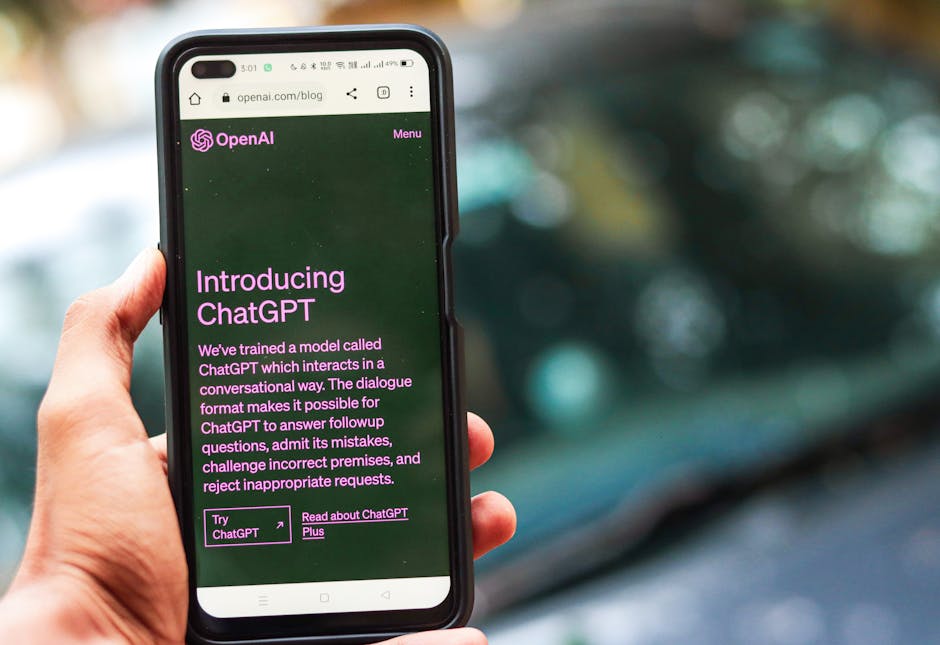
The new generation of AI assistants goes beyond FAQs. They augment sales and support by understanding context, retrieving accurate information, and handing off gracefully.
Here’s what a modern chatbot experience looks like from a customer’s perspective—conversational, contextual, and ready to escalate with full history. Notice how the interface stays unobtrusive while offering quick actions and clear options.

This experience is the result of solid knowledge management, precise intent models, and well-defined escalation paths that preserve customer satisfaction.
Types of bots
- Rule-based: Reliable for narrow use cases; predictable and compliant.
- Retrieval-augmented generation (RAG): Combines a knowledge base with generative responses for accurate, context-aware replies.
- Transactional bots: Execute tasks like booking, returns, or lead qualification via CRM and MAP integrations.
Best practices for deployment
- Clear scope: Define top intents (pricing, product features, troubleshooting, demo scheduling).
- Knowledge base hygiene: Keep docs updated; use semantic search with metadata and versioning.
- Guardrails: Set tone guidelines, prohibited responses, and a fallback to human agents.
- Escalation paths: Offer live handoff with full context to reduce customer friction.
- Accessibility and UX: Prominent but not intrusive; enable quick dismiss and alternative channels.
Key metrics
- Containment rate: Resolved within the bot vs. human escalation.
- CSAT and NPS post-chat: Gather feedback to improve responses and flows.
- Time-to-resolution: Compare pre- and post-deployment.
- Conversion influence: Meetings booked, trials started, or carts recovered via bot interactions.
Predictive customer analytics
Forecasting and understanding user behavior unlocks timely, relevant engagement.
Core use cases
- Churn prediction: Trigger save campaigns, early outreach, or in-app guidance when risk rises.
- Next-best-action/offers: Rotate offers and content to align with user intent and lifecycle stage.
- LTV prediction: Inform budget allocation, bid strategies, and personalization tiers.
- Uplift modeling: Target users more likely to be influenced by a campaign versus those who will convert anyway.
From insight to activation
- Scoring cadence: Update models weekly or in near real time, depending on channel needs.
- Thresholds and tiers: Translate continuous scores into actionable tiers (e.g., High/Medium/Low).
- Orchestration: Use your MAP or journey tool to trigger sequences, suppressions, or creative swaps.
- Closed-loop measurement: Attribute incremental uplift to predictive triggers, not just last-click events.
Interactive content creation
AI transforms static content into experiences that adapt to each visitor.
High-impact formats
- Guided quizzes and assessments: Collect zero-party data while providing tailored recommendations.
- Dynamic landing pages: Headline, proof points, and CTAs adapt to industry, persona, or intent.
- Adaptive long-form content: Summaries, highlights, and suggested reading tailored to the reader’s behavior.
- Creative variants at scale: Generate ad sets and social assets aligned with audience segments and platform best practices.
Operational tips
- Modular content system: Break content into reusable blocks with metadata (persona, stage, topic).
- Governance and QA: Human review for high-stakes pages; automated checks for tone and compliance.
- Performance loops: Feed engagement data back to refine content blocks and decision rules.
Future Trends in AI Marketing

AI-driven predictive analytics
Predictive analytics is evolving from batch reporting to real-time decisioning and strategic planning.
The visualization below shows how real-time dashboards surface trends, anomalies, and forecasts that inform faster, smarter decisions. It reflects the shift from static reports to living models that guide budget, creative, and channel choices.

When marketers can see changes as they happen, they can orchestrate mid-flight optimizations—improving ROI while reducing wasted spend.
What’s emerging
- Event-level modeling: Faster updates enable on-site adaptations mid-session.
- Causal inference and MMM: Better budget allocation by understanding true incremental impact across channels, including dark social and brand effects.
- Scenario planning: Simulate outcomes (e.g., price changes, new channels) before spending.
- Hierarchical forecasting: Blend macro trends with micro signals (account-level or SKU-level predictions).
Implications for teams
- Cross-functional collaboration: Data science partners embedded with marketing ops and content teams.
- Standardized experimentation: Pre-registered tests, lift studies, and consistent measurement frameworks.
- Model ops for marketing: Versioning, monitoring, documentation, and business-friendly dashboards.
Voice and visual search
Voice and image inputs are changing how people find and evaluate products and content. Prepare your SEO and content operations accordingly to keep your AI marketing strategies future-proof.
Optimization for voice search
- Conversational content: Answer questions directly with natural phrasing and FAQs.
- Structured data: Rich schema markup for products, reviews, how-tos, and organization info.
- Local and mobile-first: Ensure hours, locations, and NAP consistency for local queries.
- Snippet readiness: Clear, concise answers in headers and lists to win featured snippets.
Optimization for visual search
- High-quality imagery: Consistent angles, backgrounds, and alt text with descriptive keywords.
- Product attributes: Comprehensive feeds with accurate specs and variations.
- Visual sitemaps: Ensure images are discoverable and linked to relevant product/content pages.
- Multimodal content: Pair visuals with concise, intent-rich copy for better discovery and conversion.
Ethical considerations in AI marketing
Responsible AI is a competitive advantage. Trust accelerates adoption—internally and externally.
Key principles
- Transparency: Clearly disclose AI interactions and automated decisions impacting users.
- Consent and control: Honor opt-ins/opt-outs; provide easy ways to manage preferences.
- Fairness and bias mitigation: Audit datasets and outputs for unintended discrimination; diversify training examples.
- Accountability: Define owners for models, data sources, and customer outcomes.
- Safety and content integrity: Watermark synthetic media where appropriate; validate claims in generated content.
Governance framework
- Policy and standards: Document acceptable use, data retention, and review processes.
- Risk assessment: Rate initiatives by impact and sensitivity (e.g., pricing vs. blog copy).
- Model documentation: Maintain “model cards” describing purpose, data, performance, and limitations.
- Incident response: Playbooks for model failures, hallucinations, or data issues.
- Ongoing training: Upskill marketers on AI literacy, prompt design, and evaluation techniques.
A practical 90-day roadmap to implement AI marketing strategies
Use this phased plan to move from exploration to measurable impact.
Days 1–30: Foundations and pilots
- Run a stack and data audit; prioritize two high-impact, low-risk use cases.
- Implement a content ops pilot: AI-assisted briefs and drafts for a specific topic cluster.
- Stand up a basic propensity model: e.g., lead or churn scoring using existing CRM data.
- Define governance: brand voice guidelines for generated content, review workflows, and compliance checks.
Success measures: content cycle time reduced, first lift in rankings or email CTR; initial score correlation with downstream outcomes.
Days 31–60: Integrations and orchestration
- Connect AI outputs to activation: CMS updates, MAP segments, and website personalization blocks.
- Expand predictive activation: trigger journeys for high-propensity segments; suppress low-likelihood audiences.
- Introduce an AI chatbot for narrow intents with clear escalation paths.
- Establish experimentation frameworks: A/B or geo tests, standardized dashboards.
Success measures: incremental conversions vs. control, improved lead quality, chatbot containment without CSAT drop.
Days 61–90: Scale and harden
- Broaden content coverage and begin systematic content refreshes based on performance.
- Add model monitoring: drift detection, performance thresholds, and retraining cadence.
- Tighten data governance: identity resolution, schema enforcement, and consent-aware activation.
- Document playbooks and train teams; plan next-phase use cases (e.g., LTV modeling, MMM-lite).
Success measures: sustained KPI lift, predictable operations, stakeholder confidence to expand scope.
Get a head start on this roadmap with a guided content sprint: Rysa AI can generate your first topic cluster (briefs, drafts, and metadata) in days—perfect for a 30–60 day pilot that proves impact fast.
KPIs and measurement for ongoing success
- Content performance: rankings, organic sessions, share of voice, content velocity, and update cadence.
- Engagement: CTR, time on page, scroll depth, assisted conversions.
- Conversion and revenue: demo requests, trials, SQLs, win rate, pipeline, and LTV.
- Efficiency: hours saved, cycle time reductions, cost per qualified lead.
- Customer health: activation milestones, product adoption, churn rate, CSAT/NPS.
Conclusion
- AI is now foundational to modern marketing, enabling speed, personalization, and measurable growth across the funnel.
- Integrate AI into your existing stack through pragmatic pilots—start with content ops, predictive scoring, and chatbots—then scale what proves impact.
- Personalization and predictive analytics drive better engagement, conversion, and retention when fueled by quality first-party data.
- Governance matters: establish data standards, model monitoring, and ethical guardrails to sustain trust and performance.
- Measure rigorously with clear KPIs and a 90-day plan to turn experimentation into repeatable, revenue-linked operations.
Adopting AI marketing strategies isn’t just about tools—it’s about building an operating system for modern marketing. Start with a focused pilot, measure rigorously, and scale what works. The teams that integrate AI thoughtfully, respect data ethics, and commit to continuous optimization will future-proof their marketing and outperform in the quarters ahead.
Ready to turn your SEO strategy into a repeatable growth engine? Start your free trial of Rysa AI or book a demo to see how AI-generated briefs, drafts, and refreshes can multiply your content output—without sacrificing quality or brand voice.